
The Cost of Speed
The world is moving too fast.
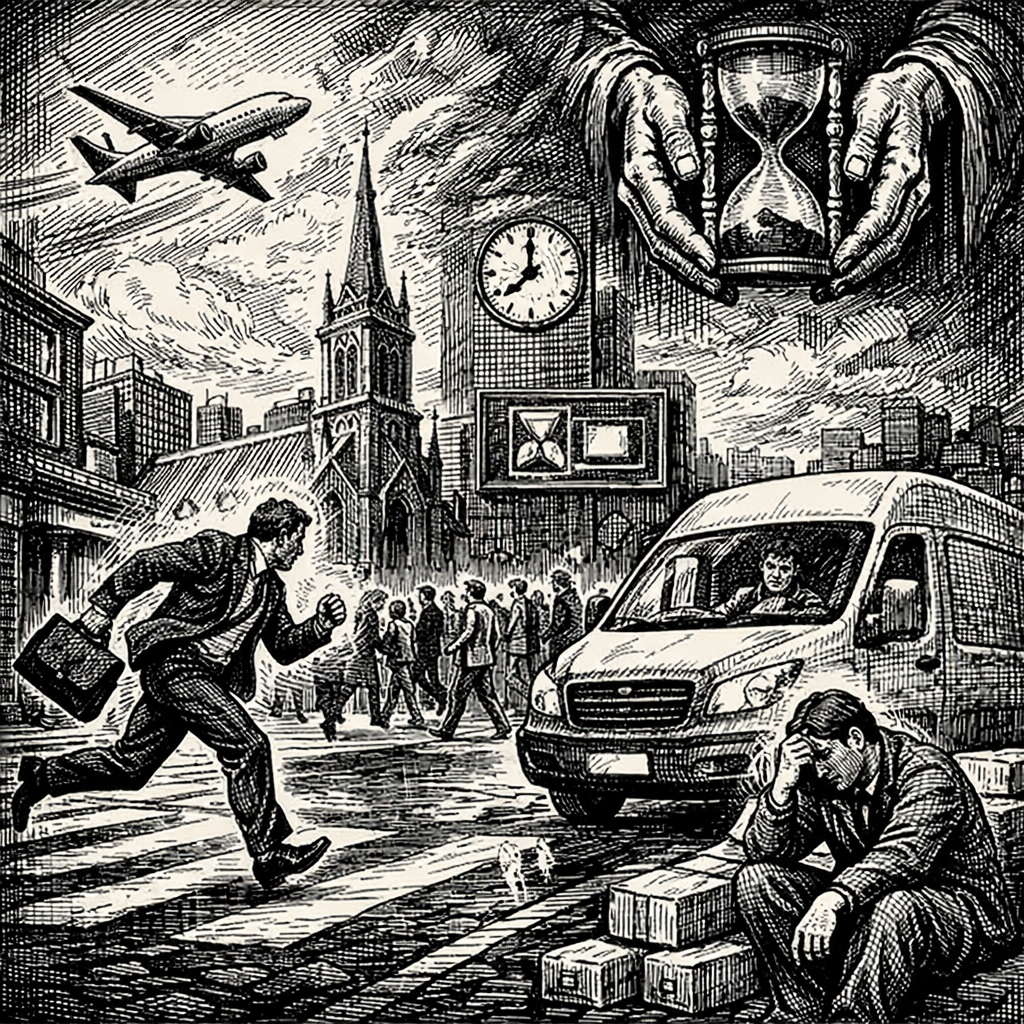
Not just technologically, but spiritually, emotionally, physically. Everything is expected now — answers, results, deliveries, progress. Waiting has become a flaw. Slowness is treated as inefficiency. Hesitation is framed as failure.
We run across roads to save seconds, even when traffic is coming. We refresh screens impatiently. We expect next-day delivery as standard, rarely stopping to think about the pressure placed on the person behind the wheel. Van drivers pushed to meet impossible schedules. Workers monitored by algorithms. Accidents explained away as “unfortunate,” rather than inevitable under constant strain.
Speed doesn’t just move things faster — it reshapes how we value life.
When everything must be immediate, people become obstacles. The pedestrian is in the way. The slow driver is an irritation. The elderly, the sick, the struggling — all are inconvenient reminders that human life has limits.
There are thousands of examples like this. Corners cut. Corners crashed into. Meals rushed. Conversations shortened. Rest postponed. Attention divided. We live as though slowing down is dangerous, when in reality it is often the haste that harms us.
Faith has always spoken against this illusion.
God does not rush. Creation unfolds in stages. Growth happens quietly. Even Christ spent thirty years in obscurity before three years of public ministry. Scripture is full of waiting — in the desert, in exile, in silence. Not as punishment, but as formation.
Speed promises control, but it delivers anxiety. It tells us we can outrun discomfort, mortality, responsibility. Yet the faster we move, the less present we become. We arrive sooner, but emptier.
There is also a moral cost. When speed is king, safety becomes negotiable. When efficiency is sacred, dignity is optional. People are pushed beyond what is reasonable, then blamed when they break. The language of “demand” replaces the language of care.
Slowing down is not laziness. It is an act of resistance.
To walk instead of run. To wait rather than force. To allow a delay without anger. To see the person rather than the timetable. These are small acts, but they restore something essential: the recognition that life is not a race to be won, but a gift to be stewarded.
The Church’s role is not to baptise the culture of haste, but to remind the world that human beings are not machines. We are not built for constant acceleration. We are built for rhythm — work and rest, action and reflection, speech and silence.
The question is no longer just how fast can we go?
It is what are we losing along the way?
Because a world that never slows down eventually stops seeing what matters. And when that happens, speed doesn’t just destroy peace — it quietly destroys life.